Settling your child into nursery when they have additional needs
Starting nursery with additional needs takes a different kind of preparation. What a good settling-in looks like, and how to make the first weeks easier.
Every child finds the first few weeks of nursery a big adjustment. When your child has additional needs, that adjustment can take longer, look different, and ask more of everyone involved. It is also completely manageable with the right preparation, and it is something we do week in, week out across our three nurture rooms.
This is what we have learned about making those first weeks work, and what you can reasonably expect from any setting you choose.
Start before the first day
The settling-in process should begin well before your child's official start date. For children with additional needs we would usually suggest more visits than the standard one or two, spread over a longer period, and at different times of day. A child who copes beautifully at nine in the morning may find the noise and movement of lunchtime much harder, and it is far better to discover that together during a visit than on day one.
Those early visits are not a test. Nobody is assessing whether your child is ready. They are for your child to build a picture of the place, and for us to build a picture of your child.
Tell us the things that are not on the form
Registration forms capture the basics. What genuinely helps is everything around the edges, and parents often hold back on this because it feels like too much detail or like they are complaining. Please share it anyway. The things worth telling any nursery include:
- What your child's distress actually looks like, because it is not always crying. It might be going very still, or very quiet, or suddenly busy.
- What helps them settle when they are already upset, and just as importantly, what makes it worse.
- Sensory things that matter: sounds they cannot tolerate, textures they avoid, whether they seek out deep pressure or movement.
- How they communicate, including gestures, signs, single words or a device, and any words that mean something specific only your family would know.
- Food, sleep and toileting patterns as they really are, not as you feel they ought to be.
- What they love. A child who lights up for anything with wheels gives us an instant way in.
None of this is oversharing. It is the difference between staff guessing for three weeks and staff knowing on day one.
Expect a phased start, not a full day
Very few children with additional needs do well going straight into full sessions. A phased start, building up gradually as your child shows they are ready, protects them from the kind of overwhelming first week that can set things back for months.
What that build-up looks like should depend on your child rather than on a fixed timetable. Some children are ready to extend after a few sessions. Others need several weeks at a shorter session before anything changes. Both are fine. A setting that insists on the same schedule for every child is telling you something about how it works.
In our nurture rooms the ratios are lower than in our main rooms, which is what makes this kind of individual pacing possible in practice rather than just in principle.
Consistency matters more than anything else
Your child needs to know who they belong to. A key person system, where one named member of staff holds responsibility for your child and is the person you talk to, does more for settling than any resource or activity.
Ask any setting you visit who your child's key person would be, how often that person is actually in the room, and what happens on their days off. The answer to that last question tells you a lot. Good settings have a planned second familiar adult rather than whoever happens to be free.
Prepare at home, gently
A few small things at home make the transition easier without turning it into a big event:
- Photographs of the room, the staff and the entrance, looked at casually over the fortnight before starting.
- Talking about nursery as a normal part of the week rather than a milestone.
- A comfort object that lives in the bag and comes every day.
- Practising the actual journey, so the route itself is familiar.
- Keeping mornings unhurried on the days your child attends, because rushing has a way of arriving at the door before you do.
If your child uses a visual timetable or now-and-next board at home, tell us. We can mirror it so the same system follows them in, and that continuity is worth a great deal.
Some weeks will go backwards
This is the part that catches parents out, and it is worth saying plainly. Progress in settling is almost never a straight line. A child who has had three lovely weeks can have a difficult fortnight after a holiday, an illness, a change at home, or for no reason anyone can identify.
That is not a sign that nursery is wrong for them, and it is not a sign that you have done something wrong. It is how it goes. What matters is that the setting responds to it by adjusting rather than by pushing through, and that they tell you honestly what they are seeing.
What to ask before you commit
If you are still choosing, these questions separate settings that genuinely do this well from settings that mean well:
- How many settling-in visits do you offer, and can we have more if we need them?
- Who would our key person be, and who covers when they are not in?
- How do you record and share what you are noticing day to day?
- What happens if our child is not coping after a few weeks?
- Have you supported children with a similar profile before, and what did that look like?
Our broader guide to choosing a nursery in Stoke-on-Trent covers the wider checks worth doing on Ofsted, ratios and funded hours.
Come and see it for yourself
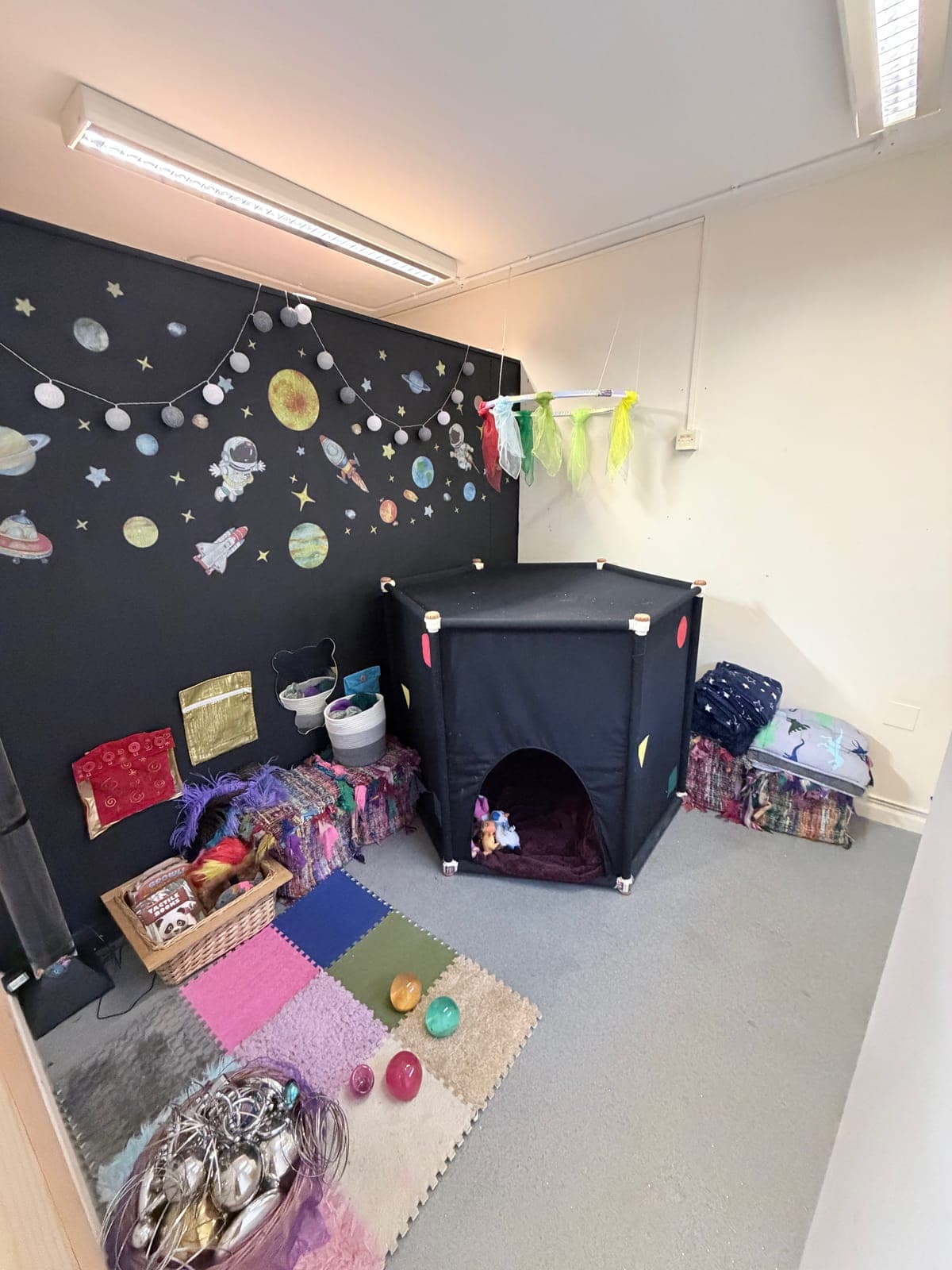
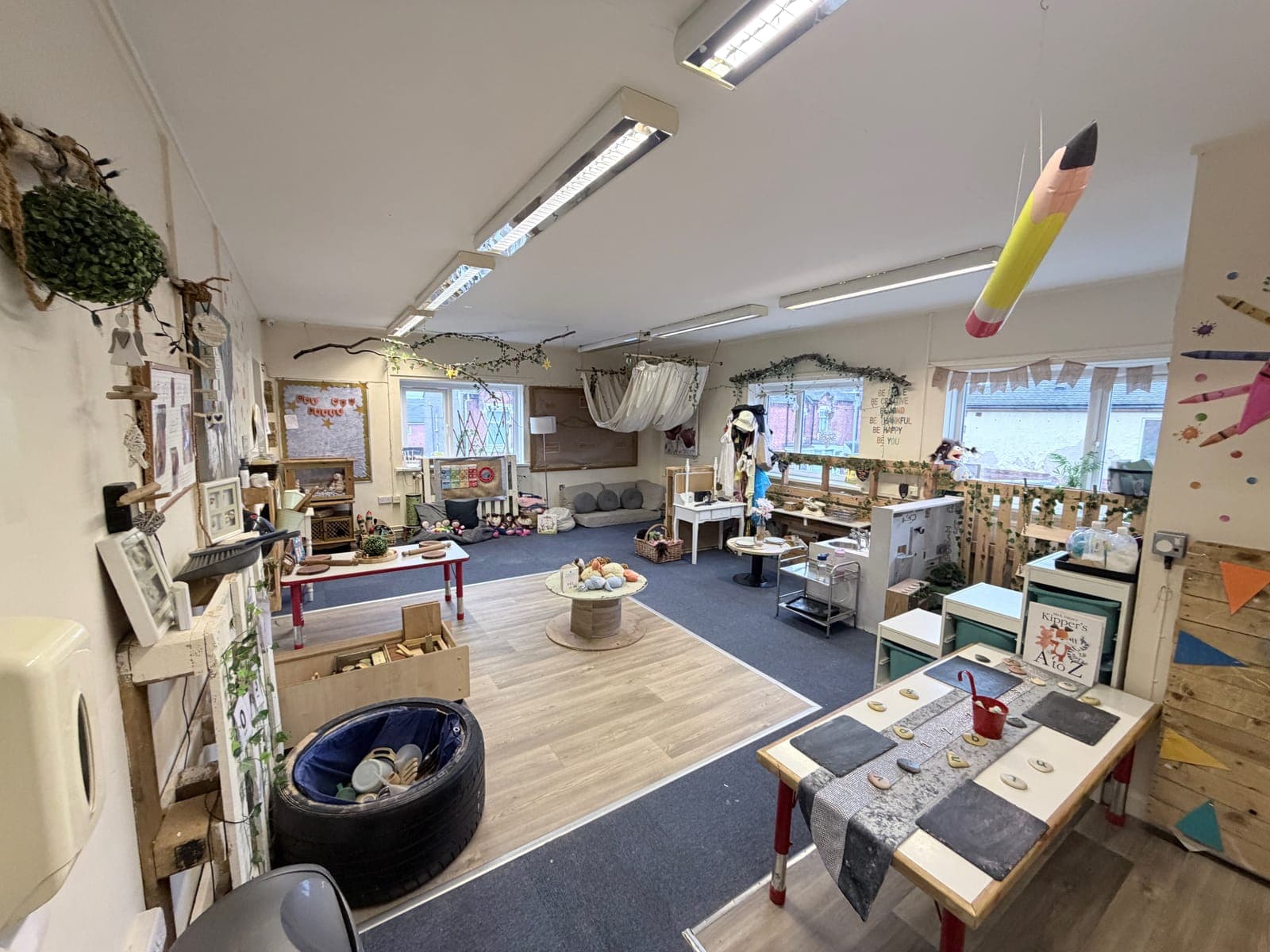
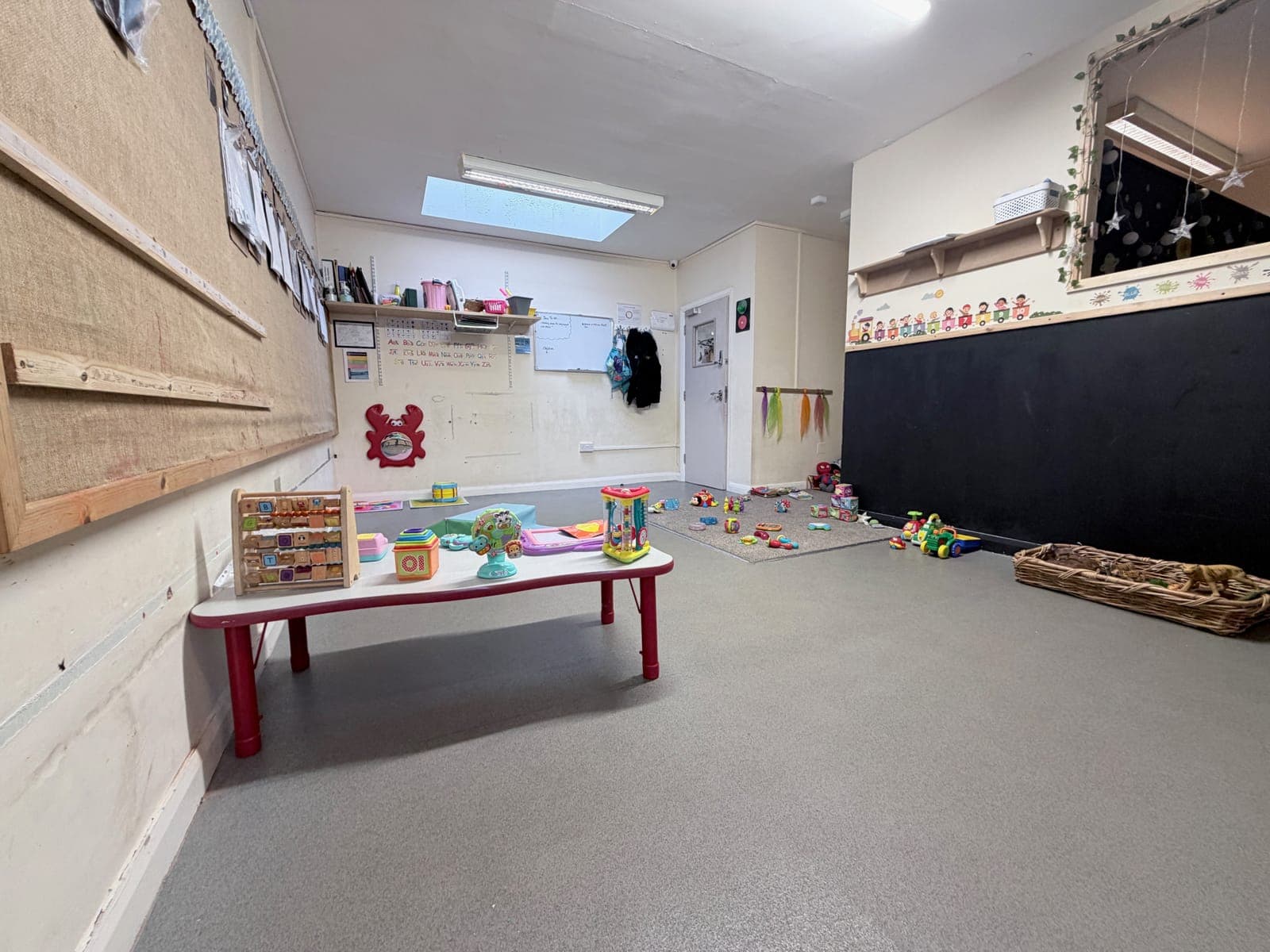
We have three dedicated nurture rooms, a sensory room and a nurture garden, with space for up to 30 children with additional needs. The best way to judge whether it suits your child is to come and stand in it. You are welcome to visit more than once before deciding, and to bring your child with you.
If you would like to arrange a visit or talk something through first, get in touch and we will find a time that works. You can also read more about how we work or look at our Ofsted reports.
Frequently asked questions
How many settling-in visits should my child have?
There is no fixed number. Children with additional needs often benefit from more visits than the usual one or two, spread over a longer period and at different times of day, so they experience the quieter and busier parts of the routine. A good setting will offer more if your child needs more.
What should I tell the nursery before my child starts?
Everything that is not on the registration form. What distress looks like for your child, what helps and what makes it worse, sensory sensitivities, how they communicate including gestures and family words, honest food and sleep patterns, and what they love. Staff can then support your child from day one rather than working it out over several weeks.
Is it normal for settling to go backwards?
Yes. Settling is rarely a straight line. A child can have several good weeks then find things hard again after a holiday, an illness, a change at home, or for no obvious reason. It does not mean nursery is the wrong choice. The setting should respond by adjusting the approach rather than pushing through.
Does Busy Bugs support children with additional needs?
Yes. We have three dedicated nurture rooms with specialist staff and lower ratios, plus a sensory room and a nurture garden, and space for up to 30 children with additional needs. Support is individualised rather than following a fixed programme.
Interested in Busy Bugs?
Come and see us in person. We love showing families around the nursery.
Get in Touch